
The Complete Guide to Product Sourcing for E-Design
How to Specify, Present and Earn from Your Recommendations:
If you're an interior designer thinking about moving into e-design, or you've already started and you're trying to figure out how product sourcing actually works online, this guide is for you.
One of the most common questions I hear from designers who are just getting started with e-design is this: how do I specify products for my clients when I don't have a trade account?
The short answer is that you don't need one. And by the end of this, you'll know exactly what to use instead, how to present your recommendations so clients actually buy from them, and how to earn a little extra income every time they do.
What is product sourcing in e-design?
In traditional interior design, product sourcing usually means using your trade relationships to access furniture and furnishings at a discount, marking up the cost for your client and earning a margin on procurement.
In e-design it works differently. Because everything happens remotely, clients are responsible for purchasing their own products. Your job is to specify the right products, present them clearly and make it as easy as possible for your client to buy.
This is actually one of the things that makes e-design so accessible. You're not holding stock, you're not managing deliveries and you're not waiting on trade accounts to be approved. You're using your design expertise to curate a scheme and your client does the rest.
Do you need a trade account to do e-design?
No. And this is really important because the belief that you need trade access before you can start is one of the most common things that stops designers from getting going.
Trade accounts are brilliant when you have them and they absolutely become more valuable as your business grows. But they're not a prerequisite for delivering great e-design work. Your clients don't know or care whether the sofa came from a trade supplier or Wayfair. What they care about is whether it looks great and whether you've made the process easy for them.
The good news is that there are genuinely brilliant products available to everyone through high street retailers and online platforms. Here's where to start.
Where to source products for e-design in the UK
High street retailers
John Lewis, Dunelm, Next Home and H&M Home are all excellent starting points. They cover a huge range of styles and budgets, they ship reliably across the UK and your clients already know and trust them. That trust makes it significantly easier for clients to actually click buy when they receive your shopping list.
All of them also have affiliate programmes which means you can earn a commission every time a client or follower purchases through your link. More on that below.
Online furniture retailers
Wayfair is one of the most useful platforms for e-design in the UK right now. With over 600,000 products available, an average order value of around £190 and reliable UK delivery, it covers everything from statement furniture pieces to everyday accessories.
La Redoute is brilliant for softer, more European inspired looks and covers furniture, textiles and lighting. Cult Furniture and Atkin and Thyme are both worth exploring if your clients have a more contemporary or industrial aesthetic.
Amazon and Etsy
These two platforms are particularly useful for the finishing touches that complete a scheme. Accessories, lighting, soft furnishings, artwork and decorative objects. Etsy is especially good when you want to add something unique and individual to a project that elevates it beyond what you'd find on the high street.
Both have free affiliate programmes and because clients are already buying from them regularly, the barrier to purchase is really low.
How to present your product recommendations so clients actually use them
Sourcing the right products is only half of the job. How you present them makes a huge difference to whether your clients actually buy from your list or just leave it sitting in their inbox.
Here's what works.
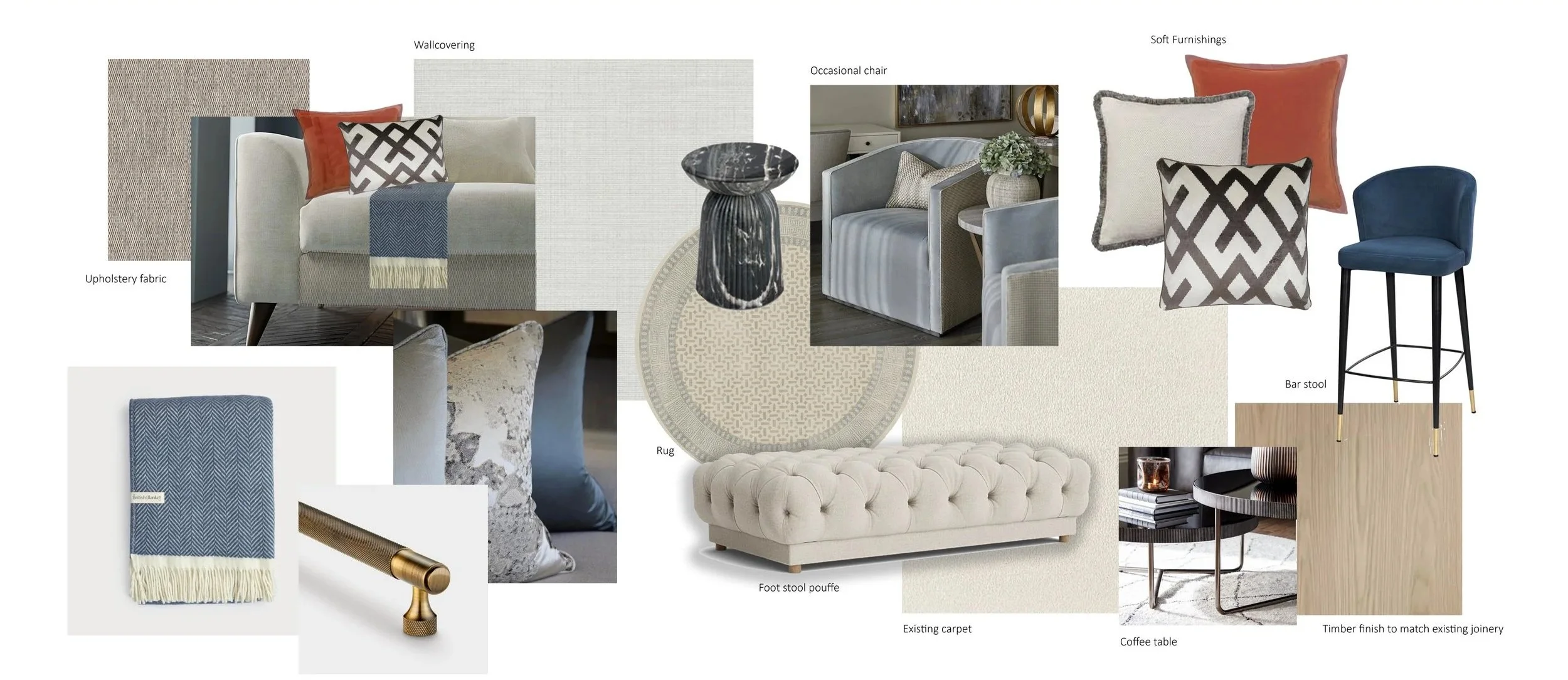
Make it visual not just a list
A spreadsheet full of product names and prices means very little to most clients. When they can see the products styled together in a mood board format they can picture how the room will look and they're far more likely to act on your recommendations. Canva is a great free tool for creating visual presentations that look professional and polished.
If you're ready to build your first e-design offer and land your first online client, the E-Design Income System walks you through the whole process in five days. It's £27 and it's the most practical thing I've put together for designers who want to make their skills work harder online.
Always include direct links
If a client has to search for a product themselves there's a good chance they either won't bother or they'll end up buying something slightly different and wonder why it doesn't look quite right. A direct link removes all the friction between seeing a product and buying it. Use your affiliate links here so you're earning from every purchase too.
It's also worth including a backup option for key pieces in case something sells out before your client gets around to ordering.
Give them a budget breakdown
Clients don't always buy everything at once and that's completely fine. But without a sense of priorities and totals, many clients don't know where to start. A simple breakdown showing the total cost of the scheme alongside a suggested phase one of the most important pieces to buy first gives them a clear action to take straight away.
Split your recommendations into anchor pieces and finishing touches. Show them what the room needs to function well first and what they can add over time.
Tell them what to buy first
Decision fatigue is real. A list of twenty products with no guidance often results in a client doing nothing at all. Flagging the three most important pieces to buy first gets the project moving and gives your client a quick win. It also means they start to see the room coming together faster which leads to happier clients and better reviews.
How to earn from your product recommendations:
This is the part that surprises a lot of designers. You're already recommending products as part of your e-design service. With the right affiliate set up in place you can earn a commission every time a client or follower buys through your link.
Here are the three best platforms for UK based e-designers right now.
LTK (formerly LIKEtoKNOW.it)
LTK is an affiliate platform built specifically for creators and designers. You create a profile, link the products you're already recommending and earn a commission when someone buys through your link. It connects to thousands of retailers so there's a good chance the brands you already use are on there.
It works particularly well with Instagram because you can link products directly in your posts and stories, which makes it easy for your followers to shop your recommendations too.
Wayfair UK via Awin
Wayfair's affiliate programme is one of the strongest available to UK designers right now. You sign up through Awin, generate your affiliate links and earn up to 12% commission on every purchase. With a 14 day cookie window and an average order value of around £190 it adds up quickly on bigger projects.
Amazon Associates
The commission rate on Amazon is lower than some other platforms but the range of products is enormous and your clients are already buying there all the time. It's particularly useful for the smaller finishing touches in a scheme where the volume of purchases makes up for the lower percentage.
All three platforms are free to join and straightforward to set up.
Pulling it all together
The key thing to remember is that product sourcing in e-design doesn't need to be complicated. You don't need trade accounts, you don't need special access and you don't need to have been doing this for years.
You need a handful of go-to retailers that suit your aesthetic and your clients' budgets, a clear and visual way of presenting your recommendations and a simple affiliate set up so you're earning from the work you're already doing.
Start with one platform. Get comfortable with it. Build your process around it. That's how a sustainable e-design business gets built, one project at a time.
If you're ready to build your first e-design offer and land your first online client, the E-Design Income System walks you through the whole process in five days. It's £27 and it's the most practical thing I've put together for designers who want to make their skills work harder online.